



Reliable power transmission starts with choosing the right components. Whether you’re designing new equipment or updating an existing system, understanding how different gear reducers and gearbox types work helps ensure your machinery performs safely, efficiently, and consistently in demanding conditions.
Three of the most commonly used solutions in industrial applications are gear reducers, worm gears, and planetary gearboxes, with each offering distinct advantages depending on torque requirements, load conditions, and operating environments.
This guide breaks down how each system functions, where it excels, and what to consider when selecting the best option for your project.
What Is a Gear Reducer?
A gear reducer (or speed reducer) is a mechanical device designed to decrease input speed while increasing output torque. Paired with a motor or other power source, it allows equipment to deliver controlled power at the right speed for the task.
How Gear Reducers Work
Gear reducers rely on meshing gears with different diameters. When a smaller gear drives a larger one, speed is reduced and torque increases. This simple concept supports a wide range of industrial applications, from winches and hoists to conveyors and material handling systems.
Where Gear Reducers Are Used
Gear reducers are ideal for applications that require:
- High torque output
- Controlled speed
- Smooth, predictable motion
- Long service life with minimal maintenance
Equipment such as industrial winches, cranes, and heavy‑duty lifting systems often rely on gear reducers to maintain performance under substantial loads.
Key Advantages
- Increased torque without requiring a larger motor
- Improved energy efficiency, helping equipment run more reliably
- Long-term durability, especially in systems exposed to continuous use
Understanding Worm Gears
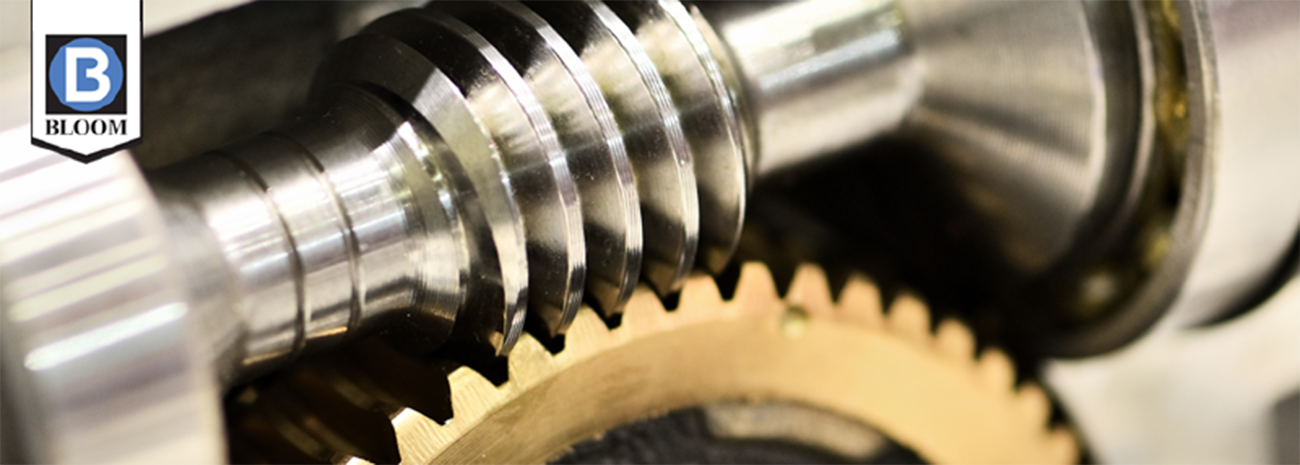
Worm gears are a specific type of reducer that uses a worm (a screw-like gear) and a worm wheel (a helical gear) to achieve significant speed reduction in a compact layout.
How Worm Gears Operate
The worm drives the wheel at a 90-degree angle. With each turn of the worm, the worm wheel advances by just one tooth. This creates:
- High reduction ratios
- Smooth, quiet operation
- Consistent performance under shock loads
Worm gears are especially valuable when equipment must maintain control during both powered and unpowered operation.
Ideal Applications for Worm Gears
A worm gear’s inherent resistance to back-driving (the output shaft turning the input shaft) makes it a strong choice for:
- Load‑holding scenarios
- Systems requiring controlled descent
- Heavy-duty lifting and positioning mechanisms
For many industrial winch applications, worm gears contribute to a stable, self‑locking design that enhances safety during lifting, lowering, and load management.
Benefits of Worm Gears
- Compact footprint compared to multi-stage gearboxes
- High torque output at low speeds
- Low noise, even under significant load
- Backdrive resistance for better load control
What Is a Planetary Gearbox?
Planetary gearboxes use a central sun gear, orbiting planet gears, and an outer ring gear to create a compact, balanced system capable of delivering very high torque.
How Planetary Gearboxes Work
In this setup:
- The sun gear drives several planet gears.
- The planet gears rotate inside the ring gear.
- Power is distributed evenly across multiple contact points.
This design delivers exceptional torque density while maintaining efficiency and stability.
Why Planetary Gearboxes Stand Out
Planetary systems offer unique advantages that make them a preferred choice in environments where precision, durability, and high torque are essential.
Common benefits include:
- High power density for applications with limited space
- Excellent load distribution across multiple gears
- High efficiency even at demanding torque levels
- Smooth operation at varying speeds
Common Applications
Planetary gearboxes are well‑suited for:
- High-capacity winches
- Cranes and lifting systems
- Mobile equipment
- Construction and utility machinery
- Situations requiring precise control under extreme loads
How to Choose the Right Gear System for Your Project
When selecting between gear reducers, worm gears, or planetary gearboxes, consider the following factors:
1. Torque Requirements
- Heavy, slow-moving loads often benefit from worm gears or planetary systems.
- Standard gear reducers work well for consistent, moderate-torque applications.
2. Load Control
- Worm gears offer natural load‑holding characteristics.
- Planetary gearboxes provide excellent control for variable or rapidly changing loads.
3. Efficiency Expectations
- Planetary gearboxes typically deliver the highest efficiency.
- Worm gears may trade some efficiency for holdback ability.
4. Space Constraints
- Planetary gearboxes provide the best power-to-size ratio.
- Worm gears offer compact designs for right-angle applications.
5. Operating Environment
- Consider temperature ranges, duty cycles, exposure to elements, and shock loading.
- Each system responds differently to extreme conditions and continuous operation.
Putting It All Together
Gear reducers, worm gears, and planetary gearboxes each deliver unique performance advantages depending on the demands of your equipment. Understanding how these systems work and where each excels allows you to make confident decisions that support the reliability, safety, and long-term performance of your machinery.
If you're planning a new build or upgrading an existing system, selecting the right gearbox is one of the most important steps in achieving dependable, consistent operation. Bloom Manufacturing offers a wide range of solutions designed to meet the demands of tough industrial environments, with components engineered for precision and durability.
To explore options for your next project or discuss custom requirements, connect with our team today; we’re here to help you find the right fit.