



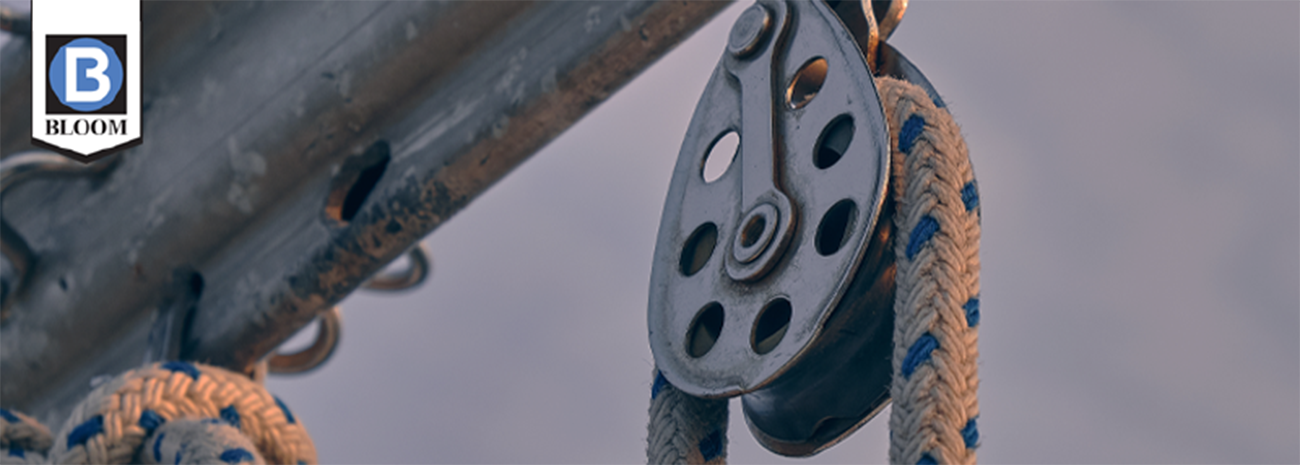
Snatch blocks may look simple at first glance: a sheave, side plates, and a pin. But in real‑world pulling and lifting applications, small setup decisions can carry out-sized consequences. Misaligned loads, overlooked ratings, or rushed rigging don’t just reduce efficiency; they increase risk to both equipment and personnel.
Whether you’re recovering a vehicle, redirecting a pull, or building mechanical advantage into a winch system, avoiding a few common mistakes can make the difference between a controlled operation and a dangerous one.
Below are some of the most frequent snatch block setup errors seen in the field, along with practical ways to prevent them.
Using the Wrong Snatch Block for the Job
Mistake: Assuming all snatch blocks are interchangeable
Not all snatch blocks are designed for the same loads, rope types, or operating environments. Using an undersized block, or one incompatible with the rope or cable, can introduce excessive wear or lead to failure points elsewhere in the system.
How to avoid it:
- Verify the snatch block’s working load limit (WLL), not just the winch’s rating
- Match sheave size and groove profile to the rope or wire diameter
- Account for real working conditions such as shock loads, pull angles, and duty cycle
A block rated “high enough” on paper can still be the wrong choice if it’s mismatched to the system as a whole.
Misunderstanding Load Direction and Line Angle
Mistake: Treating side loads as negligible
Snatch blocks are designed to carry load through the sheave, not through the side plates. When the line enters or exits at extreme angles, side loading places uneven stress on components and reduces safety margins.
How to avoid it:
- Keep entry and exit lines as straight as possible
- Use anchor placement to minimize sharp deflection angles
- If a directional change is unavoidable, evaluate whether a different rigging configuration or additional block is safer
Clean line paths improve both efficiency and system longevity.
Ignoring Anchor Point Integrity
Mistake: Focusing on the snatch block while overlooking the anchor
Even a correctly rated snatch block cannot compensate for a weak or unreliable anchor. Trees, structures, or improvised attachment points that aren’t engineered for load‑bearing can fail without warning.
How to avoid it:
- Select anchor points with known load ratings whenever possible
- Inspect shackles, hooks, and mounting hardware before each use
- Distribute loads thoughtfully to avoid concentrating force at a single point
In many failures, it’s the anchor, not the snatch block, that is the weakest link.
Failing to Account for Increased Line Tension
Mistake: Forgetting that mechanical advantage changes system loads
Using a snatch block to create mechanical advantage increases forces throughout the system. Assuming the setup behaves like a straight pull is a common and dangerous oversight.
How to avoid it:
- Recalculate line tension across the entire system, not just the load being moved
- Confirm that every component (rope, block, anchor, winch) is rated for the total load
- Remember that friction and heat reduce real‑world capacity
Mechanical advantage improves control only when the system is engineered to handle it.
Poor Rope or Cable Seating
Mistake: Letting the line ride incorrectly in the sheave
Improper seating can cause the rope or cable to climb the sheave, contact side plates, or wear unevenly. This often occurs during rushed setups or when debris is present.
How to avoid it:
- Fully open the snatch block and confirm proper line seating before loading
- Keep sheaves clean and free of grit, corrosion, ice, and debris
- Stop operations and reset if the line begins to wander
Correct seating reduces wear and keeps forces where they belong.
Skipping Pre‑Use Inspection
Mistake: Assuming the block is “good enough” because it worked last time
Snatch blocks operate under high stress. Pins loosen, bearings wear, and housings fatigue — often without obvious warning.
How to avoid it:
- Inspect the block before every use, paying attention to pins, side plates, and sheave rotation
- Check for cracks, deformation, or excessive play
- Remove damaged components from service immediately
A short inspection takes far less time than dealing with a failure midoperation.
Rushing the Setup
Mistake: Prioritizing speed over control
Time pressure leads to skipped checks, poor alignment, and improvised rigging. Most snatch block accidents trace back to haste rather than equipment design.
How to avoid it:
- Build setup time into the job plan
- Assign one person to confirm the full rigging configuration before loading
- Pause after initial tensioning to reassess alignment and load path
Controlled setups stay controlled under load.
A Safer Winch System Starts with the Details
Snatch blocks are proven, reliable tools, but only when they’re used intentionally. Attention to ratings, alignment, anchoring, and inspection protects both equipment and crews while improving performance in the field.
If you’re evaluating your current rigging setup or planning a new winch system, taking the time to choose the right components and use them correctly goes a long way toward safer, more predictable operations. Learn more about snatch blocks, winch systems, and rigging considerations by exploring Bloom Manufacturing’s technical resources or connecting with our team for application-specific guidance.
Frequently Asked Questions About Snatch Block Setup
What is the most common snatch block mistake?
Side loading caused by poor line alignment is one of the most frequent issues. Snatch blocks are designed to carry load through the sheave, not the side plates.
Does using a snatch block increase line tension?
Yes. Mechanical advantage increases system forces, requiring all components, including rope, anchors, and winches, to be rated accordingly.
Can any snatch block be used with synthetic rope or wire rope?
No. Sheave size, groove type, and block design must match the rope or cable being used to prevent damage and unsafe operation.
How often should a snatch block be inspected?
Snatch blocks should be inspected before every use, with particular attention to pins, sheaves, and side plate integrity.
Is anchor selection as important as snatch block rating?
Yes. A strong snatch block cannot compensate for an inadequately rated or unstable anchor point.
May 1, 2026 by Bloom Manufacturing