



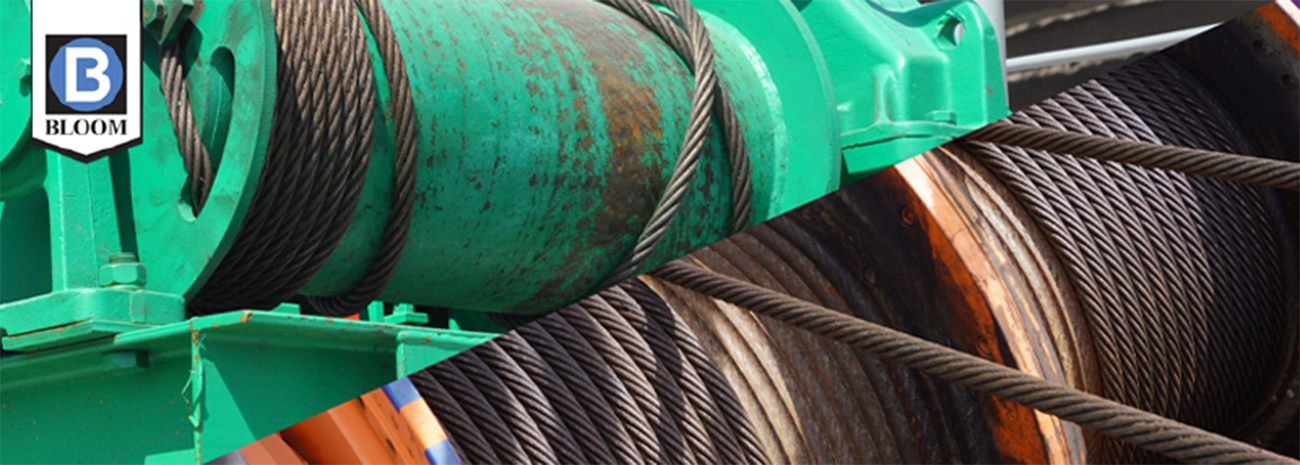
Operators don’t usually notice the winch drum — until something goes wrong. A line starts stacking unevenly, tension spikes, and suddenly the job slows to a crawl. In the worst cases, the cable digs into itself, tangles, or forms a tight, unusable coil. What looks like a small detail becomes the source of costly downtime and damaged equipment.
The right choice comes down to how the line performs under load, how often your conditions shift, and how much control you need over spooling. Each option solves a different set of problems. Understanding those tradeoffs can prevent issues like line damage and birdnesting before they start.
Quick Navigation
- What happens when winch spooling goes wrong
- When grooved drums help control line placement
- How grooved drums help reduce line damage
- When smooth drums are the better fit
- How to reduce birdnesting on smooth drums
- How to choose between grooved and smooth drums
- FAQs about winch drum selection
What Happens When Winch Spooling Goes Wrong
Before comparing drum types, it helps to understand what’s happening on the drum during operation.
Winch systems rely on controlled layering of cable or rope. When the line wraps evenly, tension is distributed across the drum face, and each layer supports the next. When the line does not spool properly, small issues can build quickly.
Common problems include:
- Line crossovers that create pressure points and weaken cable strands
- Uneven layering that causes localized stress and inconsistent tension
- Birdnesting, which happens when slack line collapses into tangled loops
- Crushing, which occurs when upper layers press into poorly supported lower wraps
Drum design plays a direct role in reducing these risks. Whether you’re working with wire rope or synthetic line, understanding the parts of your winch can help you see how drum design, line control, and spooling behavior affect long-term performance.
Grooved Drums: Built for Controlled Spooling
Grooved drums are machined with a helical pattern that helps guide the line into consistent paths across the drum surface. Each wrap follows a defined track, reducing the variation in how the line layers.
This can be especially valuable when the application requires repeatability.
Where Grooved Drums Make a Difference
Grooved drums are most effective in applications with consistent conditions and a need for predictable line placement. They work best when the line is expected to follow the same path repeatedly without frequent changes in load profile, direction, or line type.
Common use cases include:
- Applications with defined line lengths and consistent cycles
- Situations where even tension across layers is important
- Operations involving high-value or specialized cable
- Installations where predictable spooling reduces the need for constant adjustment
In these applications, the groove pattern acts as a built-in guide that helps keep the line organized as it pays out and retrieves.
How Grooves Help Prevent Line Damage
The primary advantage of a grooved drum is control. By giving each wrap a defined path, grooves reduce the likelihood of overlap, shifting, and pinch points. When each wrap lands where it is supposed to, there is less opportunity for one layer to cut into another under load.
Without grooves, line movement during loading can shift wraps out of position. With grooves, that movement is more controlled, helping preserve the structure of the spool.
Over time, this can help support:
- Reduced internal cable wear
- Lower risk of strand damage
- More consistent tension distribution
- Better line tracking during repeatable pulls
If you’re evaluating a winch for a specific application, Bloom’s custom winch solutions can help address details like drum design, line requirements, mounting needs, and operating conditions.
Managing Birdnesting with Fixed Spooling Paths
Birdnesting often starts when slack line fails to seat properly on the drum. Grooved drums help by giving the line a defined place to settle, even when conditions are less than perfect.
Grooves do not eliminate slack conditions entirely. Operators still need to monitor tension, alignment, and line behavior. However, the structure of the groove pattern can reduce the chance that loose wraps collapse into tangled loops during payout or retrieval.
Limitations to Keep in Mind
Grooved drums require the groove pattern and line characteristics to work together. Line diameter, construction, and length all need to fit the drum’s design parameters.
Grooved drums may be less forgiving when:
- Line types change frequently
- Operating conditions vary widely from one job to the next
- Operators need flexibility in line speed, direction, or layering patterns
- The line does not match the groove profile
In these cases, the same precision that makes grooves effective can become restrictive.
Smooth Drums: Flexible for Variable Conditions
Smooth drums offer a flat spooling surface without defined channels. Instead of guiding the line mechanically, they rely on factors such as operator technique, fleet angle, tension, fairleads, and spooling devices to control how the line layers.
Where Smooth Drums Work Best
Smooth drums are often a practical choice when flexibility matters more than repeatability. They can be useful in applications where loads, line lengths, or spooling patterns change from one task to the next.
Typical scenarios include:
- Field operations with inconsistent conditions
- Applications where multiple line types may be used
- Jobs requiring frequent adjustments to line speed or direction
- Projects where operators actively manage spooling during use
- Systems that already include external spooling controls
The smooth surface gives operators more room to adapt when the job does not follow a fixed routine.
Addressing Line Damage on a Smooth Drum
Without grooves, the risk of line damage depends more heavily on how the system is set up and operated. Proper fleet angle, steady tension, and careful line monitoring all play a role.
When managed correctly, smooth drums can still provide reliable performance. The key is preventing bunching, overlap, and shifting under load.
This often involves:
- Maintaining steady tension during payout and retrieval
- Using level wind systems or spooling guides when appropriate
- Training operators to monitor line placement
- Inspecting the line regularly for wear, flattening, or damage
Smooth drums require more active control, but they can perform well when the full system is designed and operated with spooling behavior in mind.
Reducing Birdnesting Through System Setup
Smooth drums are more susceptible to birdnesting when slack develops. Without a defined groove path, loose line can pile up quickly if tension drops or the line shifts out of position.
System design and consistent operation are both important. Keeping the line under controlled tension and avoiding sudden load changes can help reduce slack formation.
Additional components may also help, including:
- Fairleads
- Level wind systems
- Tensioning devices
- Properly positioned guides
These tools help control how the line approaches and leaves the drum.
Where Smooth Drums Offer an Advantage
The absence of grooves allows the drum to accommodate different line types and usage patterns without requiring the same level of groove-to-line matching. For operations that do not follow a fixed routine, that adaptability can outweigh the benefits of guided spooling.
Smooth drums may also allow operators to correct issues in real time instead of working within a fixed track. In changing environments, that flexibility can be an advantage.
Choosing Based on the Job, Not the Spec Sheet
Neither drum type is universally better. The right fit depends on how the system is used.
When a Grooved Drum Is the Better Fit
A grooved drum may be the better option when:
- The application involves repeatable cycles with consistent line lengths
- Load conditions are stable and predictable
- Line integrity needs to be preserved over time
- Spooling precision reduces the need for operator correction
- The line type and diameter are not expected to change frequently
In these situations, grooves act as a built-in control system, reducing variability and helping protect the line from avoidable stress.
When a Smooth Drum Is the Practical Choice
A smooth drum may be the better fit when:
- Operating conditions change frequently
- Multiple line types or sizes may be used
- Operators need flexibility in how the system is run
- External spooling controls are already part of the setup
- The application does not follow a repeatable line path
In these situations, adaptability may matter more than fixed guidance.
If you’re comparing different types of winches, Bloom’s overview of different winch types can help explain how drum size, cable type, and winch configuration affect performance.
Real-World Factors That Can Tip the Scale
In practice, the decision often comes down to more than the drum surface.
Operator Experience
Experienced operators may be able to manage spooling effectively on smooth drums, even in changing conditions. Less experienced teams may benefit from the built-in guidance of a grooved drum because it reduces some of the variability in line placement.
Maintenance and Inspection
Grooved drums require inspection to make sure the groove pattern remains intact and free of wear that could interfere with line tracking. Smooth drums are simpler in design, but they place more responsibility on line condition, setup, and spooling behavior.
Cost of Downtime
In operations where downtime is expensive, reducing the risk of spooling-related issues may justify the added control of a grooved drum. In lower-risk or more variable environments, the adaptability of a smooth drum may be the better investment.
Preventing Line Damage Starts with the Right Foundation
Line damage and birdnesting rarely come from one cause. They build from small inconsistencies, such as uneven tension, shifting wraps, uncontrolled slack, or line and drum mismatches.
The drum you choose sets the baseline for how those variables are managed. Grooved drums provide structure and reduce variability. Smooth drums allow flexibility but place more responsibility on system setup and operation.
Proper handling still matters regardless of drum type. The best choice is the one that supports how the winch is actually used in the field.
Putting Drum Selection into Practice
Well-managed spooling should not draw attention. It keeps operations moving, protects line integrity, and reduces the likelihood of avoidable failures.
When problems do arise, they are often tied to a mismatch between equipment design and real-world use. Selecting the right drum type helps align the winch with the demands of the job.
For some operations, that means the consistency of a grooved drum. For others, it means the flexibility of a smooth drum.
If your application involves specific line requirements, variable conditions, or ongoing spooling challenges, working with a manufacturer that builds around real operating conditions can make a difference. Explore options from Bloom Manufacturing to ensure your winch system is designed for how you actually operate. Can’t find the option you’re looking for? Contact our team today to discuss our custom winch solutions.
FAQs About Grooved and Smooth Winch Drums
What is birdnesting on a winch drum?
Birdnesting refers to tangled loops of cable or rope that collapse into a disorganized mass on the drum. It often happens when slack line is introduced and not properly controlled during spooling.
Why does uneven spooling damage winch line?
Uneven spooling can create crossovers, pinch points, and unsupported layers. Under load, those areas may experience added pressure, which can weaken cable strands, flatten sections of line, or create premature wear.
Are grooved drums only used for wire rope?
No. Grooved drums can be designed for wire rope or synthetic line, but the groove pattern must match the line type and diameter. Proper pairing is important for effective tracking and line protection.
Can a smooth drum be upgraded to reduce spooling issues?
Yes. Components such as level wind systems, fairleads, guides, or tensioning devices can help improve line control on a smooth drum. These additions can support more consistent spooling during operation.
Do grooved drums eliminate the need for operator monitoring?
No. Grooved drums provide guidance, but operators still need to monitor tension, alignment, and line condition. Grooves reduce the likelihood of certain spooling issues, but they do not replace proper operation.
How do I know which drum type is right for my application?
Start by evaluating how consistent your operating conditions are. If your application involves repeatable cycles, stable loads, and a consistent line type, a grooved drum may provide better control. If conditions vary or flexibility is required, a smooth drum may be more practical.
July 1, 2026 by Bloom Manufacturing