



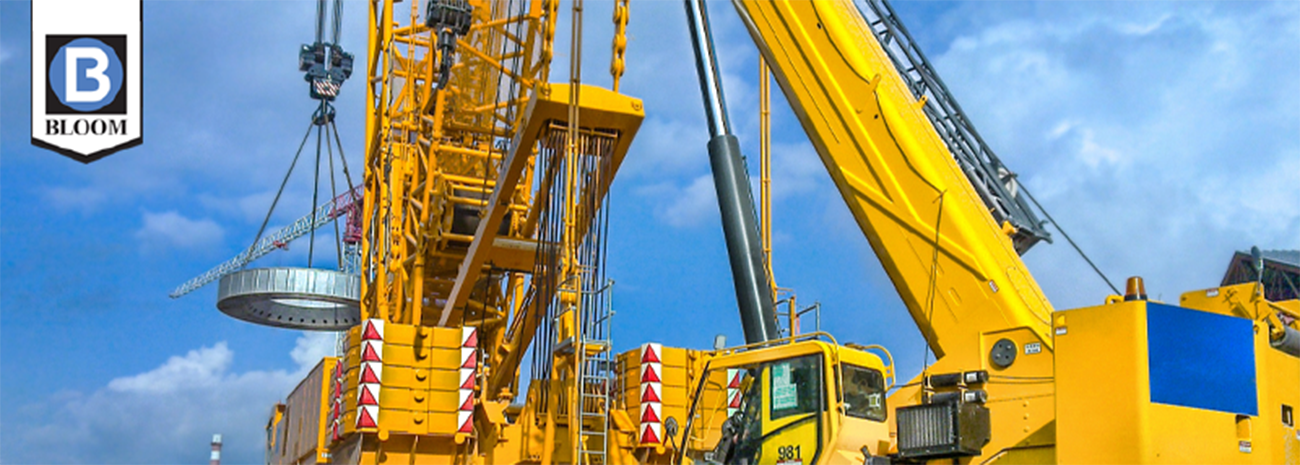
On a busy job site, motion is constant. Loads are raised, lowered, repositioned, and held in place while crews work around them. When that motion isn’t controlled, even routine lifts can become dangerous. A suspended load that drifts, back‑drives, or drops unexpectedly doesn’t just risk damaged equipment, it can put lives at risk.
That’s where brake winches come in. Unlike free‑spooling or open‑drum systems, brake winches are built to hold a load securely at any point during a lift. They slow movement when power is reduced, prevent uncontrolled descent, and add a layer of mechanical safety that does not depend on constant operator input.
Understanding how brake winches work and why they are specified for certain applications helps contractors, engineers, and operators make better decisions about equipment selection and jobsite safety. This article breaks down the core components of a brake winch, explains how its load‑holding system functions, and looks at how these designs reduce risk in real‑world jobsite conditions.
What Is a Brake Winch?
A brake winch is a mechanical winch designed to control and hold a load when lifting or lowering, even when input power is stopped. The defining feature is an internal braking mechanism that automatically engages to resist load movement.
Unlike standard pulling winches, which rely on friction, operator control, or external locking methods, a brake winch incorporates a built‑in load‑holding brake. That brake is engineered into the drivetrain and activates without requiring additional steps from the operator.
Brake winches are commonly used in applications where:
- A load must remain suspended for extended periods
- Uncontrolled back-driving could cause damage or injury
- The operator needs fine control over downward movement
- Gravity loads exceed what friction alone can safely manage
You’ll find brake winches in construction, utility work, manufacturing environments, material handling systems, and any setting where predictable, controlled load movement matters.
Why Load Control Matters More Than Lift Capacity
It’s easy to focus on rated capacity when selecting a winch. Capacity is critical, but it’s only a portion of the safety picture. How a load behaves during lowering or when power stops often determines whether an operation remains controlled or turns hazardous.
A load that drifts downward under its own weight, accelerates unexpectedly, or free-spools if tension is lost introduces risks that no amount of operator experience can fully eliminate.
Brake winches address this by controlling energy, not just lifting force. The braking system absorbs and resists the gravitational pull of the load, ensuring that movement happens only when and how the operator intends.
Inside the Brake Winch: Key Components
While designs vary by manufacturer and application, most brake winches share several core mechanical elements working together.
Load‑Holding Brake
The load‑holding brake is the heart of the system. In many industrial brake winches, this is a self‑activating mechanical brake, often using friction discs or a sprag‑type mechanism.
When power is applied to lift or lower a load, the brake releases in a controlled way. When power is removed, the brake engages automatically, locking the drum in place. This means the load remains suspended without drifting, even if the operator steps away from the controls.
Because the brake is mechanical rather than electronic, it does not rely on sensors, voltage, or software to function.
Gear Train
Brake winches typically use a gear reduction system to multiply torque and manage speed. The gearing works in tandem with the brake, allowing slow, deliberate movement while maintaining holding strength.
In properly designed systems, the gearing prevents back-driving, meaning the load cannot force the drum to rotate in reverse under gravity.
Drum and Cable Interface
The drum provides the surface where wire rope or synthetic cable is wrapped. Proper drum design ensures even spooling, which maintains consistent load distribution and reduces wear on both the cable and internal components.
Uneven spooling can introduce shock loads or uneven braking forces, so drum geometry and surface finish play a larger role than many users realize.
Mechanical Integration
What separates a brake winch from a standard winch is how these parts are integrated. The brake is not an add‑on. It is designed as part of the load path, working every time the winch operates.
How a Brake Winch Controls a Load During Operation
To appreciate the safety benefits, it helps to walk through a typical lift cycle.
Lifting
As the operator applies power, the brake releases proportionally, allowing the drum to rotate. The gear train delivers controlled torque, and the load rises smoothly. The brake does not disengage completely but instead remains ready to re-engage the moment input stops.
Holding
When lifting stops, whether intentionally or because power is cut, the brake immediately engages. The load remains fixed. There is no delay, no need for manual locking, and no risk of slow creep.
This holding function is especially important when workers must position themselves near or under a suspended load to guide, align, or secure it.
Lowering
Lowering is where brake winches provide the most noticeable safety benefit. Instead of the load driving the winch downhill, the brake meters the descent. Movement occurs only as fast as power is applied.
This prevents runaway loads, sudden drops, and jerking motion that can shock the system or destabilize the work area.
Built‑In Safety Advantages on the Jobsite
Brake winches contribute to jobsite safety in ways that go beyond basic load control.
Reduced Dependence on Operator Timing
In non‑braked systems, safety depends heavily on operator reaction time and experience. Brake winches reduce that dependency by making load holding automatic rather than manual.
If an operator releases the control unexpectedly or a power interruption occurs, the brake responds instantly.
Improved Stability During Positioning
Fine positioning tasks, like holding a beam in place, aligning a component, or suspending equipment during installation, are safer when the load does not wander. Brake winches allow incremental adjustment — without overshooting or backsliding.
Lower Risk from Power Loss
Power loss can happen without warning. With a brake winch, power loss results in the safest possible outcome: the load stays where it is.
Mechanical Reliability
Mechanical braking systems provide predictable performance in harsh environments. Dust, vibration, and temperature swings that challenge electronic systems have less impact on purely mechanical designs.
Common Applications Where Brake Winches Are Specified
Brake winches are chosen not because they are more complex, but because certain jobs demand greater control.
They are often specified for:
- Lifting and holding construction materials at height
- Utility installation and maintenance work
- OEM equipment that requires controlled vertical movement
- Industrial material handling systems
- Applications where workers must operate near the suspended load
In each case, the risk profile favors controlled motion and secure holding over speed.
Selecting the Right Brake Winch for the Job
Not all brake winches are identical. Proper selection depends on understanding the application rather than simply choosing the highest capacity available.
Key factors include:
- Load weight and center of gravity
- Required line speed for lifting and lowering
- Duty cycle and expected usage frequency
- Environmental conditions such as moisture, debris, and temperature
- Mounting orientation and structural integration
A brake system must be matched to both the load and the way the winch will be used. Overspecifying can be inefficient, while underspecifying introduces risk.
Maintenance and Long‑Term Safety Performance
Brake winches are designed for durability, but like all mechanical equipment, they require inspection and maintenance to perform safely over time.
Regular checks should include:
- Brake engagement consistency
- Wear on friction components
- Cable condition and spooling pattern
- Gearbox lubrication and integrity
Because the brake is integral to safety, maintenance practices should focus on preserving predictable braking behavior rather than just lift capacity.
Why Brake Winch Design Matters
The value of a brake winch lies in its design discipline. A well‑engineered brake system anticipates real‑world conditions like uneven loads, partial power, or human error, and responds predictably.
For manufacturers like Bloom Manufacturing, the focus is on creating winches that behave consistently over long service lives. That consistency is what keeps crews safe when conditions are less than ideal.
FAQs: Brake Winches and Load‑Holding Safety
What makes a brake winch different from a standard winch?
A brake winch includes an internal load‑holding brake that automatically engages when power is stopped. Standard winches may rely on friction or manual controls and do not provide the same level of load security.
Can a brake winch hold a load indefinitely?
When properly rated and maintained, a brake winch can securely hold a load for extended periods. The brake is designed to remain engaged without continuous power input.
Are brake winches slower than non‑braked winches?
Brake winches prioritize control over speed. While line speeds may be lower, the trade‑off is smoother operation and improved safety during lifting and lowering.
Do brake winches require electrical controls to function safely?
No. The braking action is mechanical. This means the load‑holding function does not depend on electronics, sensors, or external control systems.
Is a brake winch necessary for every lifting application?
Not always. Brake winches are best suited for gravity loads and applications where controlled holding and lowering are critical to safety.
A Safer Way to Manage Motion
Lifting equipment doesn’t just move materials; it manages risk. Brake winches play a critical role in making sure that risk stays controlled, even when conditions change or power is interrupted.
By understanding how load‑holding systems work and where they add the most value, teams can make more informed choices about the equipment they rely on every day. For applications where stability, predictability, and safety matter, brake winches remain a proven solution.
To learn more about Bloom Manufacturing’s approach to engineered winch solutions, explore the resources available at bloommfg.com or contact the team to discuss application‑specific requirements.
June 1, 2026 by Bloom Manufacturing