



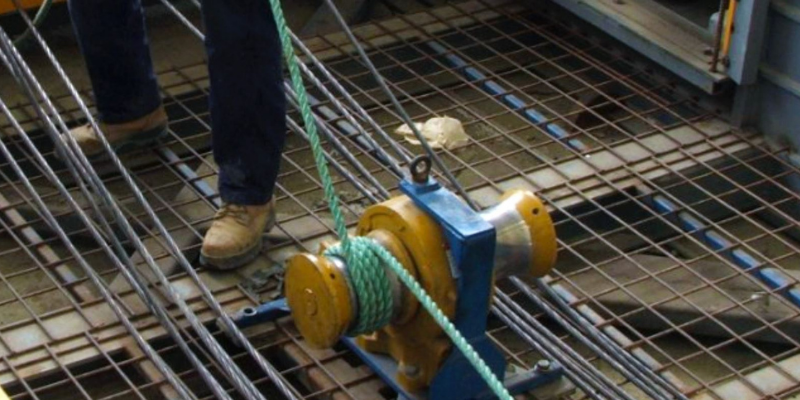
Here at Bloom Manufacturing, we offer lots of reliable products, one of which being our capstan winches. There are various types of winches out there, but capstans have unique elements that make them stand apart. In this blog, you’ll learn exactly how capstans work and what they’re used for so you can make an educated purchase.
What is a capstan?
In general, a capstan is a mechanical device that is used to move heavy weights. This is done by means of cables, ropes or chains.
How does a capstan work?
The drum of a capstan can be driven either manually or by electricity, causing it to rotate around a vertical axis. This winds in the line being used (either a cable, rope or chain), wrapping it around the drum.
What is a capstan used for?
The capstan winches we offer at Bloom Manufacturing are primarily used on marine craft and fishing boats. More specifically, they’re used for pot and net haulers and for dock and barge applications. In the utility industry, capstan winches are often used on vehicles.
What capstans can I choose from?
To make it easier for you, we’ve laid out your options below. Simply click the product name to read more on our catalog!
-
Series 1000 Capstan: Up to 3000 lbs.
-
Series 1100 Capstan: Up to 3000 lbs.
-
Series 2000 Capstan: Up to 6000 lbs.
-
Series 1400 Capstan: Up to 7800 lbs.
What is a galvanized capstan winch?
Not only do we offer a variety of capstans, but we also give you the option to order your winch galvanized. This means the iron or steel is coated with a protective layer of zinc in order to prevent rusting. Here are the galvanized options:
-
Series 1000 Galvanized Capstan: Up to 3000 lbs.
-
Series 1100 Galvanized Capstan: Up to 3000 lbs.
-
Series 2000 Galvanized Capstan: Up to 6000 lbs.
-
Series 1400 Galvanized Capstan: Up to 7800 lbs.
If you need some assistance narrowing it down, we’re happy to help. Contact us and be sure to visit our online catalog to shop our other products, including lift-safe winches, speed reducers, winch accessories and more.
Capstan Winch FAQs
+Why are capstan winches commonly used in marine and fishing applications?
Capstan winches are well suited for marine environments because they allow continuous pulling without storing rope on a drum. This makes them ideal for pot hauling, net handling, dock operations, and barge work where rope length needs to remain flexible and easily managed.
+What advantages does a capstan have over a traditional drum winch?
Unlike a drum winch, a capstan does not store rope, which reduces tangling and wear while allowing operators to control load movement using friction. This makes capstans effective for repeated pulls, variable distances, and applications that require precise line handling.
+Why would I choose a galvanized capstan winch?
A galvanized capstan is coated with zinc to help prevent corrosion and rust. This is especially important in marine, coastal, or outdoor environments where exposure to moisture, saltwater, and harsh weather can significantly reduce the lifespan of untreated steel.
+Are galvanized capstans only for marine use?
No. While galvanization is common in marine environments, galvanized capstans are also beneficial in utility, construction, and industrial settings where equipment is exposed to rain, humidity, chemicals, or frequent washdowns.
+How do I determine the right capstan capacity for my application?
Capacity should be based on the maximum expected working load, not just occasional peak loads. Factoring in safety margins, line friction, duty cycle, and environmental conditions helps ensure the capstan operates reliably without excessive strain.
+Can capstan winches be used on utility or service vehicles?
Yes. Capstan winches are often mounted on utility and service vehicles for pulling cable, positioning equipment, and assisting with ground-based hauling tasks where controlled tension and flexible rope handling are required.
+What types of rope or cable can be used with a capstan winch?
Capstans can be used with rope, cable, or chain depending on the model and application. Selecting the appropriate diameter and material is important to ensure proper friction, control, and operator safety.
+When is a capstan winch not the best choice?
Capstans are primarily designed for pulling rather than vertical lifting. For applications requiring precise lifting, load holding, or rope storage on a drum, a traditional winch may be more appropriate.