



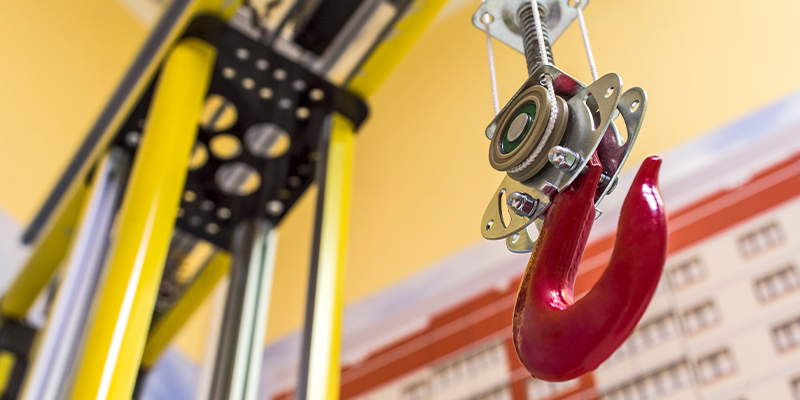
If you work in the marine, forestry, construction, utilities, waste management, or drilling industries, chances are you rely on heavy-duty pulling or lifting equipment. Two commonly confused tools are winches and capstan winches. While they may appear similar at first glance, they are designed for different applications and operate in distinct ways.
This guide breaks down the key differences between a winch and a capstan, how each works, and when to use one over the other. For over 100 years, Bloom Manufacturing has been a trusted manufacturer of high-quality industrial winches. We serve demanding industries where reliability and safety matter most.. If you’re unsure which solution fits your application, our team is here to help.
What is a Winch?
A winch is a mechanical device used to pull, lift, or lower heavy loads using a rope, wire rope, or cable. It consists of a drum mounted on an axle, which rotates to wind or unwind the line.
Key Components of a Winch
- Drum that stores the rope or cable
- Motor or manual crank to control movement
- Gear system to increase pulling force
- Brake or pawl to hold loads securely
Winches can be manually operated or motorized (electric, hydraulic, or pneumatic), depending on the application. The defining feature of a winch is that the load-bearing line wraps directly onto the drum, storing the cable neatly as the load moves.
Common Uses for Winches
Winches are widely used across multiple industries, including:
- Marine vessels and fishing boats
- Construction and heavy equipment
- Forestry and logging operations
- Drilling and utility work
- Off-road and recovery vehicles
- Aircraft and industrial lifting systems
Because the rope or cable is contained on the drum, winches are ideal when controlled lifting, precise positioning, or compact storage is required.
What is a Capstan?
A capstan is a rotating drum mounted vertically on an upright spindle. Unlike a winch, a capstan does not store the rope or cable. Instead, the operator wraps the rope around the drum, and friction between the rope and drum provides the pulling force.
The rope feeds off the capstan freely as the load moves, allowing for continuous pulling or hauling without a fixed rope length.
How a Capstan Works
- Rope or cable is wrapped around the drum several times
- The drum rotates, creating friction
- The operator controls tension manually
- The rope exits the capstan instead of winding onto it
This design makes capstans especially effective for jobs that require long-distance pulling or constant adjustment.
Common Uses for Capstan Winches
Capstans are often found in:
- Marine and fishing vessels
- Forestry and logging operations
- Dockside and shoreline hauling
- Utility and ground-based pulling jobs
Capstan winches are particularly valuable when ropes must be changed frequently, or when loads are pulled over long distances without storage constraints.
What Is the Difference Between a Capstan and a Winch?
The main difference between a winch and a capstan comes down to how the rope or cable is handled.
|
Feature |
Winch |
Capstan |
|---|---|---|
|
Rope Storage |
Cable winds onto a drum |
Rope does not store on drum |
|
Drum Orientation |
Horizontal |
Vertical |
|
Control |
Automatic tension and storage |
Manual tension and storage |
|
Best for |
Lifting, precise pulling |
Continuous hauling |
|
Line length |
Limited by drum size |
Unlimited |
In simple terms:
- A winch pulls and stores the cable
- A capstan pulls without storing the cable
Which One Is Right for Your Application?
Choosing between a winch and a capstan depends on how the load needs to move and how the rope or cable is managed
Choose a winch if you need:
- Controlled lifting or lowering
- Compact cable storage
- Precision positioning
- Higher load security
Choose a capstan if you need:
- Continuous or long-distance pulling
- Flexible rope lengths
- Quick rope changes
- Hands-on load control
Understanding these differences helps ensure safer operation, better performance, and longer equipment life.
Winch vs. Capstan FAQs
+What is the difference between a capstan and a winch?
The main difference is how the rope or cable is handled. A winch winds the rope or cable onto a drum, while a capstan pulls the rope using friction without storing it on the drum.
+What is a capstan winch used for?
A capstan winch is used for continuous pulling or hauling of loads over long distances. It’s common in marine, fishing, forestry, and utility applications where rope length needs to stay flexible.
+What is a winch used for?
A winch is used to lift, lower, or pull heavy loads with controlled precision. It’s ideal when the rope or cable needs to be stored neatly on a drum.
+Does a capstan store the rope or cable?
No. A capstan does not store the rope or cable. The rope wraps around the drum temporarily and feeds off freely as the load moves.
+Does a winch store the rope or cable?
Yes. A winch winds the rope or steel cable onto its drum as it pulls or lifts the load, which helps with compact storage and precise positioning.
+Which is better: a capstan or a winch?
Neither is universally better—it depends on the job. Winches are better for lifting and controlled pulling, while capstans are better for continuous hauling and flexible rope lengths.
+Are capstan winches only used in marine applications?
No. Capstans are common in marine use, but they’re also used in forestry, construction, drilling, and utility work for ground-based pulling tasks.
+Can a capstan lift heavy loads?
Capstans are primarily designed for pulling rather than lifting. For vertical lifting, a winch is typically the safer and more appropriate option.
+Do winches come in different power options?
Yes. Winches may be manual or powered by electric, hydraulic, or pneumatic motors depending on the application and load requirements.
+How do I choose the right winch or capstan for my application?
Consider load weight, pulling distance, direction of pull, rope management needs, and safety requirements. An experienced manufacturer can help match equipment to your use case.
August 29, 2022 by Bloom Manufacturing
Matt | Feb 7th 2023 @ 4:53 PM
Can a drum winch be "converted" to a capstan winch by simply wrapping the cable around the spool a few times? In the end it's just a motor spinning some kind of wheel pulling something with cable/rope right?
Bloom Mfg | Dec 5th 2024 @ 10:21 PM
Thank you for the question! Yes, a winch could be converted to capstan on a standard drum, but only potential issue would be the cable wandering. On a capstan winch, the drum is concaved to ensure cable stays tightly on the drum in center.